
Weekly Weather Watch: Tuesday, June 9th, 2026
Sea surface temperatures in the region we focus on for El Niño have warmed to an average of +1.3°C (2.3°F) this week, within the range for a moderate El Niño, and continued warming is expected. I should note we are not officially in an El Niño pattern yet, but likely will be this summer, fall, and winter. Two links for more information: El Niño 2026, Hurricane Outlook 2026 (Southwest US, Mexico, and Hawai’i beware). These ocean surface conditions continue developing an El Niño at a pace similar to 1997’s event.
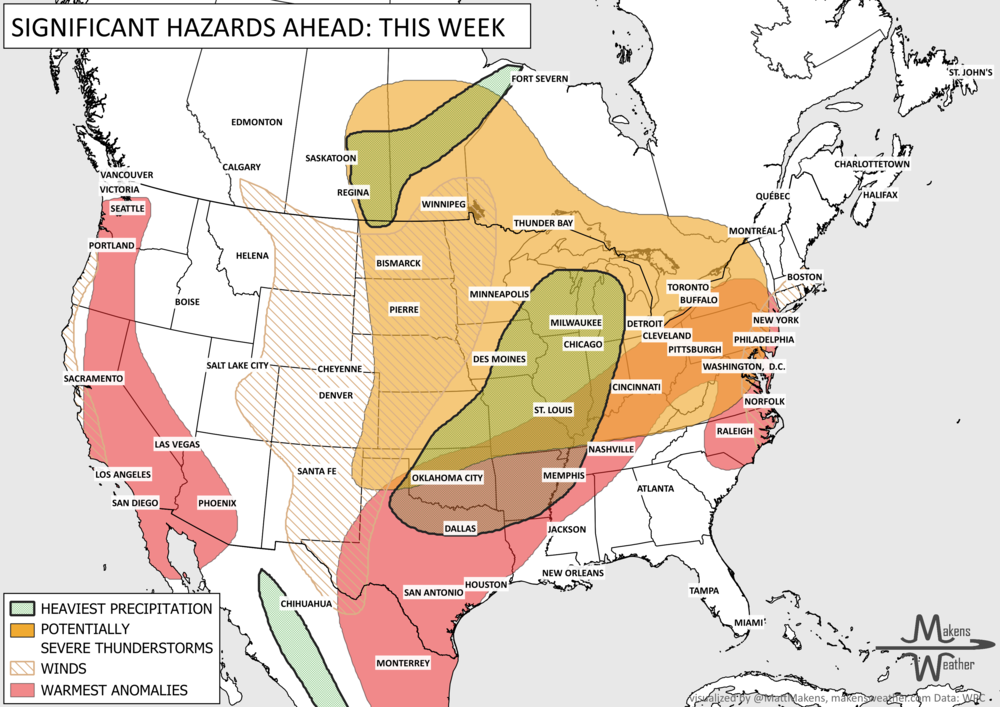
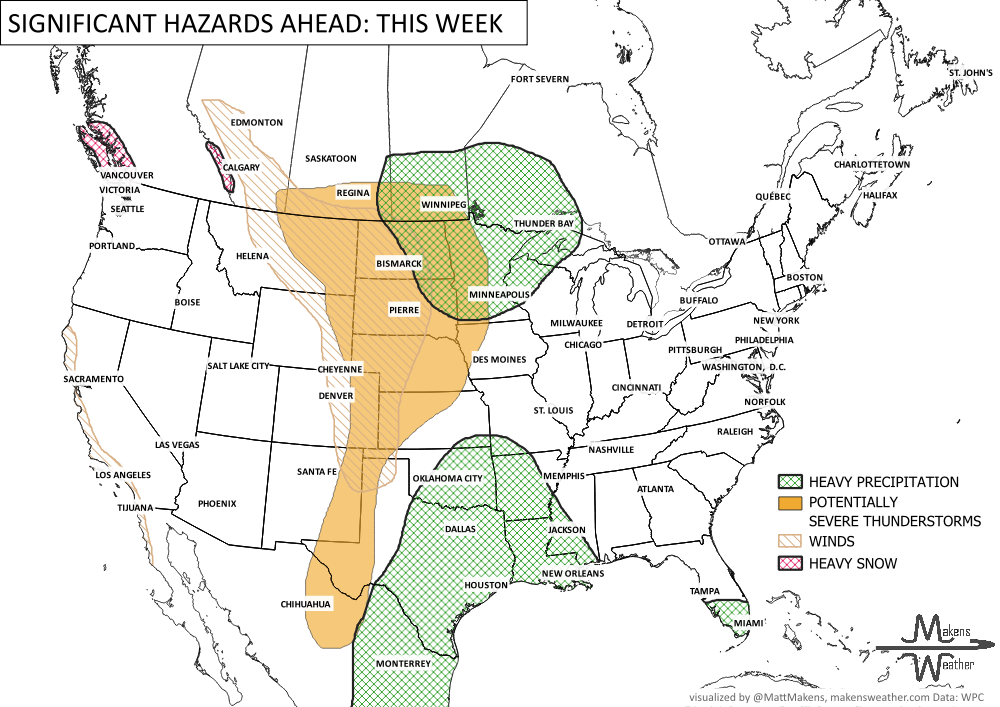
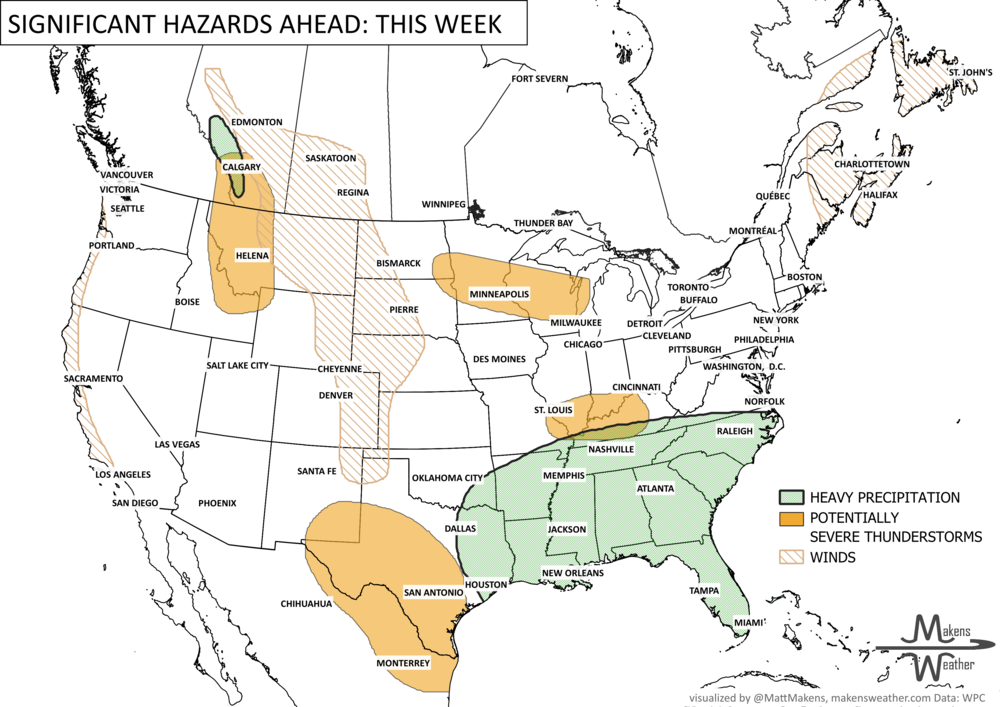
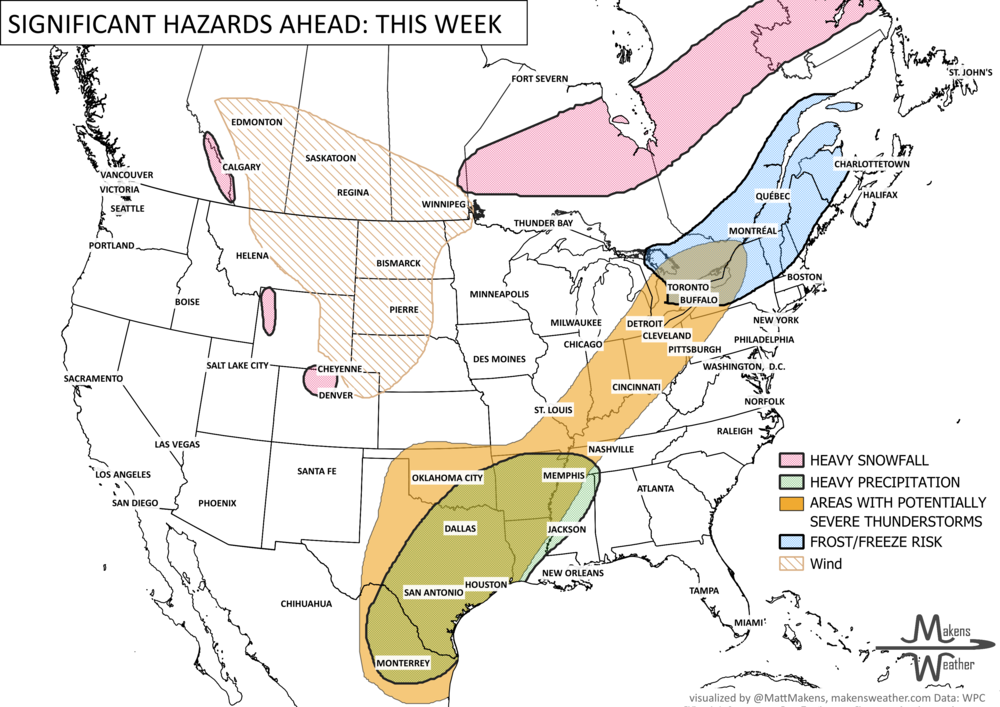
An active and impactful weather pattern is setting up across much of North America through next week. Multiple rounds of severe thunderstorms are expected from the eastern Canadian Prairies, U.S. Plains into the Mississippi Valley, bringing the risk of damaging winds, large hail, and tornadoes. Heavy rainfall may lead to localized flooding from the Northern Plains to the Southeast, while wildfire concerns continue across the Four Corners region. At the same time, summer heat is building, with the East experiencing its hottest temperatures of the season late this week before above-average warmth expands westward during the weekend.
BRAND NEW PRODUCT☀️📊
Know What's Coming — For Your Exact Location
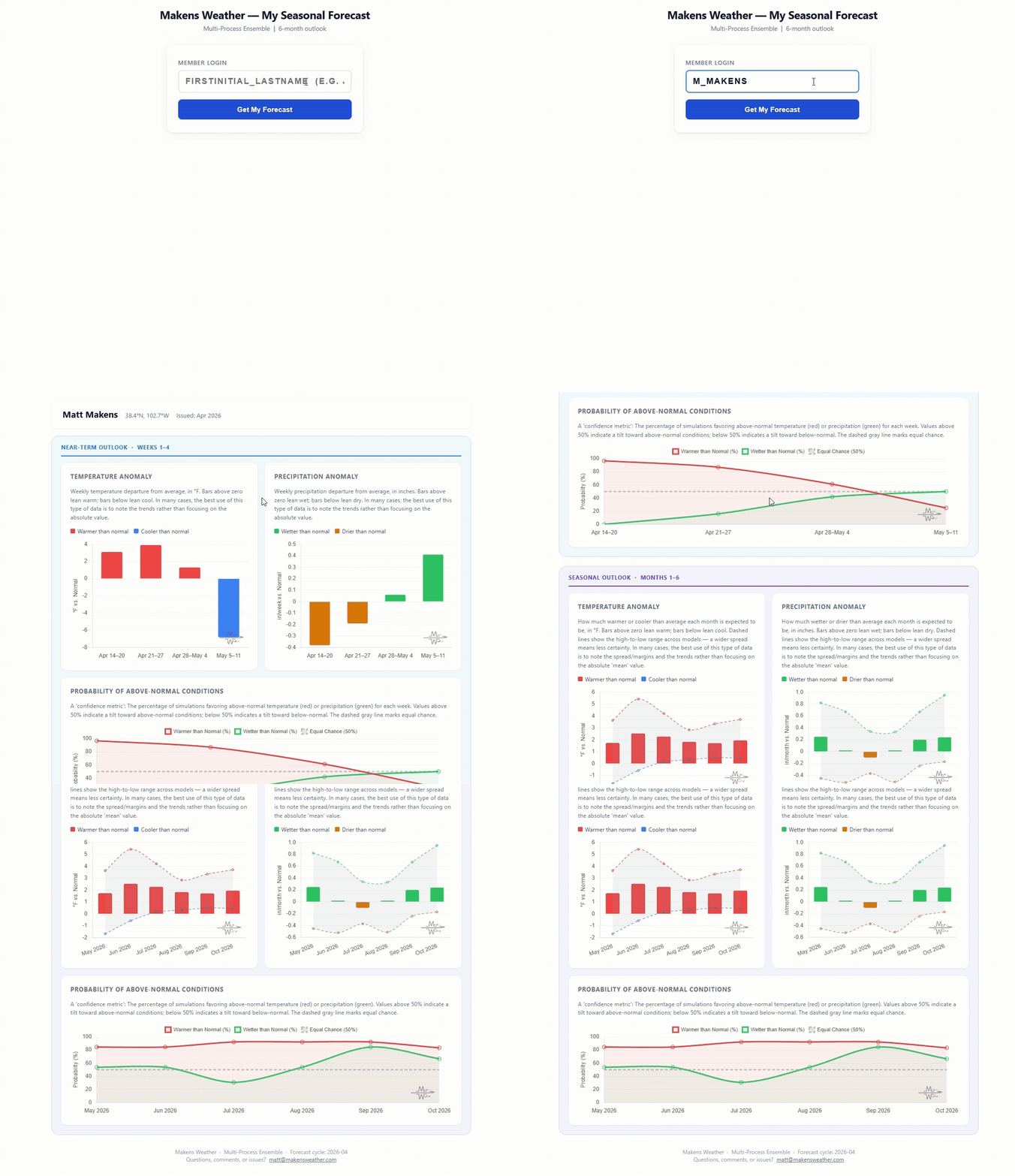
Most seasonal outlooks give you a broad regional brushstroke. The Makens Weather Seasonal Forecast App gives you a point forecast for your location — temperature and precipitation outlooks for the next six months, updated every morning.
Your address, not a region: Enter your location once. Every month, the latest consensus forecast is waiting for you.
Weeks 1–4 near-term: Refreshes daily, so short-range planning and seasonal planning live in the same place.
Not just the mean: Charts show the full model spread so you can see how confident the ensemble is, not just which direction it's leaning.
Probability metrics: Know whether 60% or 90% of simulations favor above-normal temperatures. Confidence matters as much as the forecast itself.
If you're making decisions that depend on what the next few months look like — planting windows, input purchases, grazing plans, contract timing — this is the tool that bridges the gap between "what's the general trend" and "what should I actually expect at my operation."
📈 The latest weekly and monthly outlooks 👉 Join Now to Access
HEADLINERS:
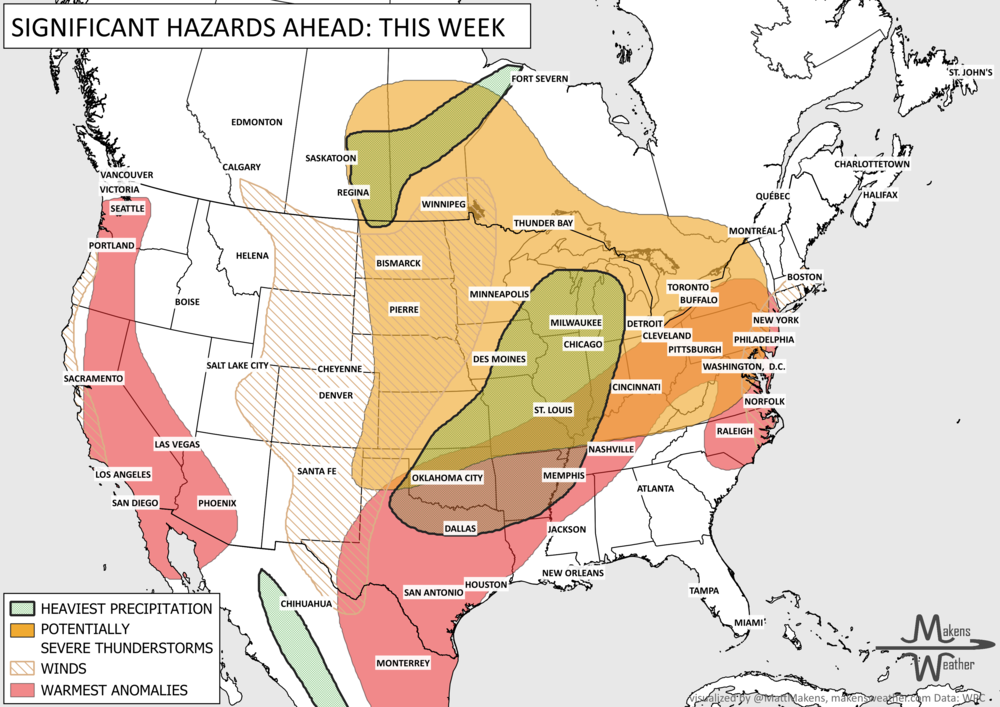
Next 7 Days: Key Timing and Impacts
Tuesday (June 9)
Northern Plains, Central Plains, and the Southern High Plains face the highest risk for severe thunderstorms.
Damaging wind gusts, large hail, and tornadoes are possible, including a few stronger tornadoes.
Heavy rain may cause localized flooding in North Dakota, Minnesota, and surrounding areas.
Additional flooding concerns develop across the Ohio Valley, Tennessee Valley, and Southeast.
Elevated wildfire concerns continue across the Four Corners Region.
Wednesday (June 10)
Severe storms shift into the Upper Mississippi Valley and Middle Mississippi Valley.
Damaging winds and large hail remain the primary concerns, with tornadoes also possible.
Heavy rainfall develops across parts of Kansas, Nebraska, Missouri, and Iowa, increasing flash flood concerns.
Heavy rainfall develops across parts of Alberta, Saskatchewan, Manitoba, and Ontario.
Thursday (June 11)
Continued heavy rainfall threat from the Upper Mississippi Valley into portions of the Great Lakes.
Localized flash flooding remains possible in urban and low-lying areas.
Rain and mountain snow continue across portions of the Pacific Northwest and Northern Rockies.
Heavy rainfall across parts of Ontario.
Friday (June 12)
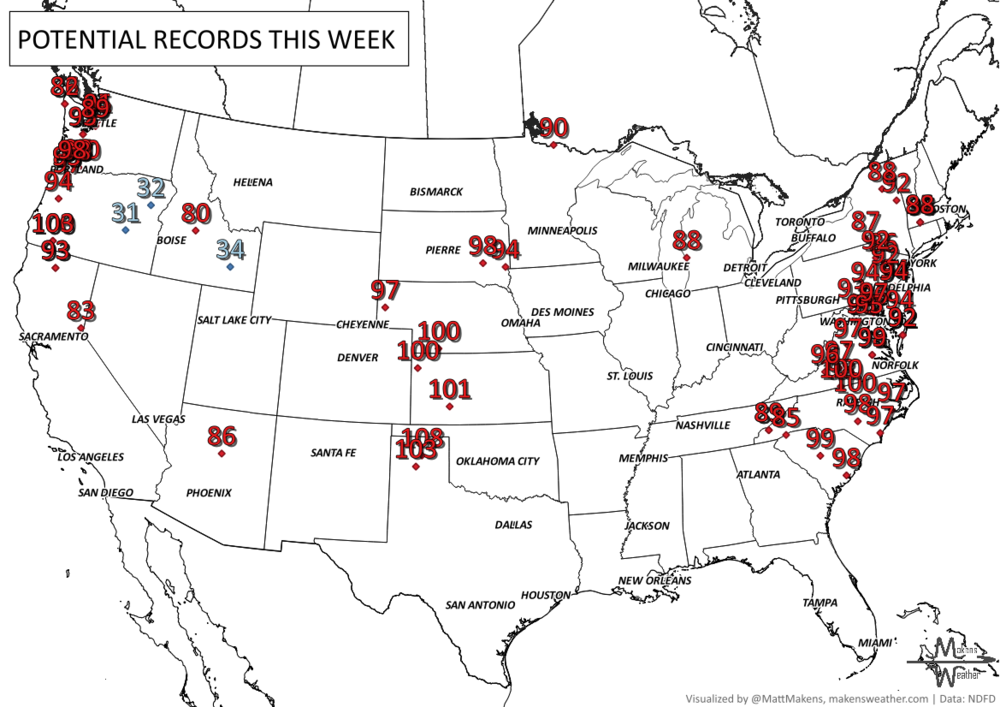
Peak of the East Coast heat wave.
Temperatures may challenge records across the Mid-Atlantic and Northeast.
Thunderstorms continue along a stalled front from the Ohio Valley into the Southern Plains.
Weekend (June 13-14)
Increasing threat for repeated rounds of heavy rain and thunderstorms across Oklahoma, Kansas, Missouri, and Arkansas.
Flash flooding concerns grow where storms repeatedly track over the same locations.
Heat persists across the Southern Plains, Lower Mississippi Valley, and Desert Southwest.
Temperatures exceed 100 degrees in parts of Arizona, Nevada, and California deserts.
Early Next Week (June 15-16)
Flooding concerns continue across portions of the Central Plains and Mississippi Valley.
Heat expands into the Pacific Northwest and much of the West Coast.
Humidity gradually eases across parts of the South as a trough develops over the central U.S.
SET YOUR WATCHES - WHEN THE MOISTURE ARRIVES:
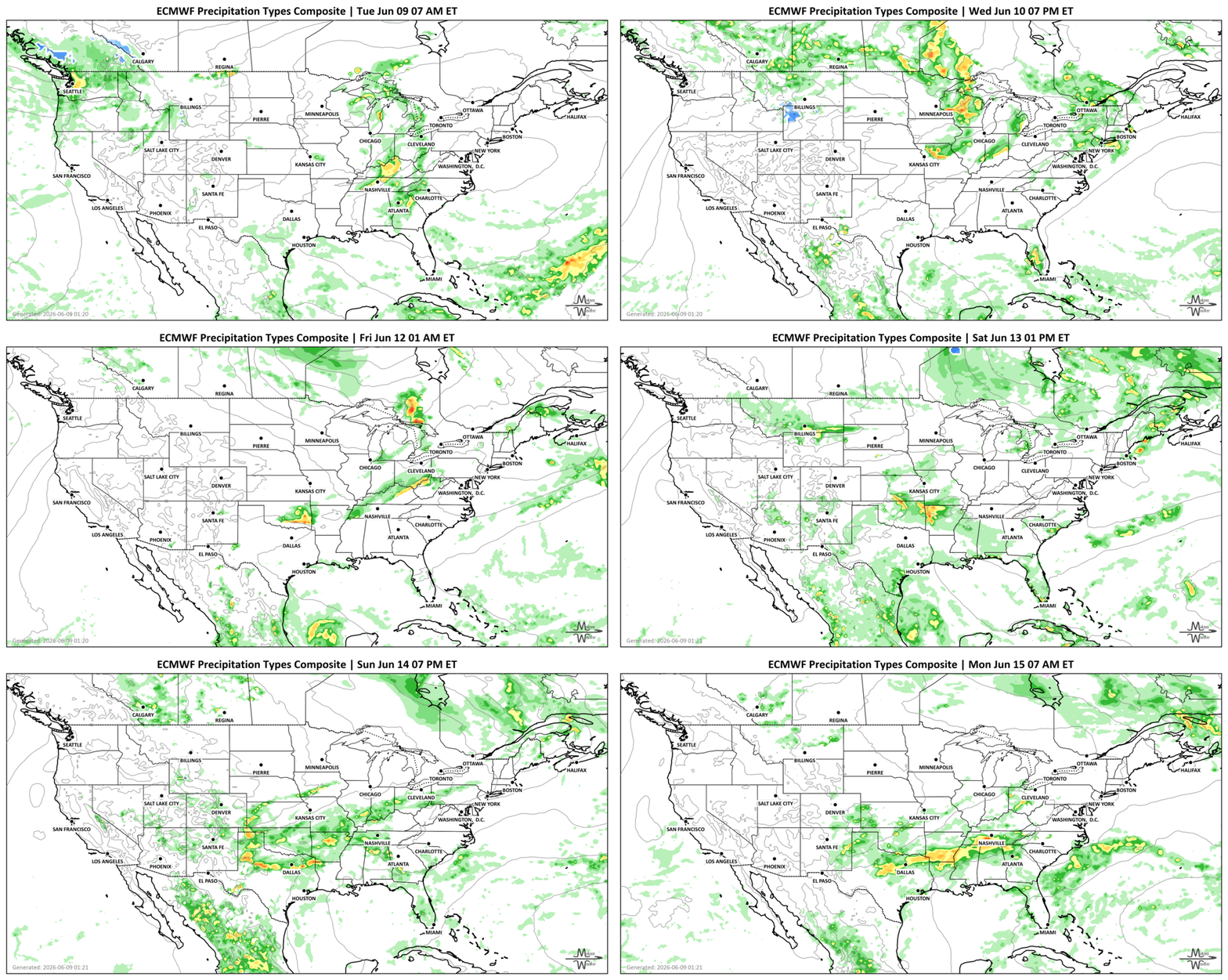
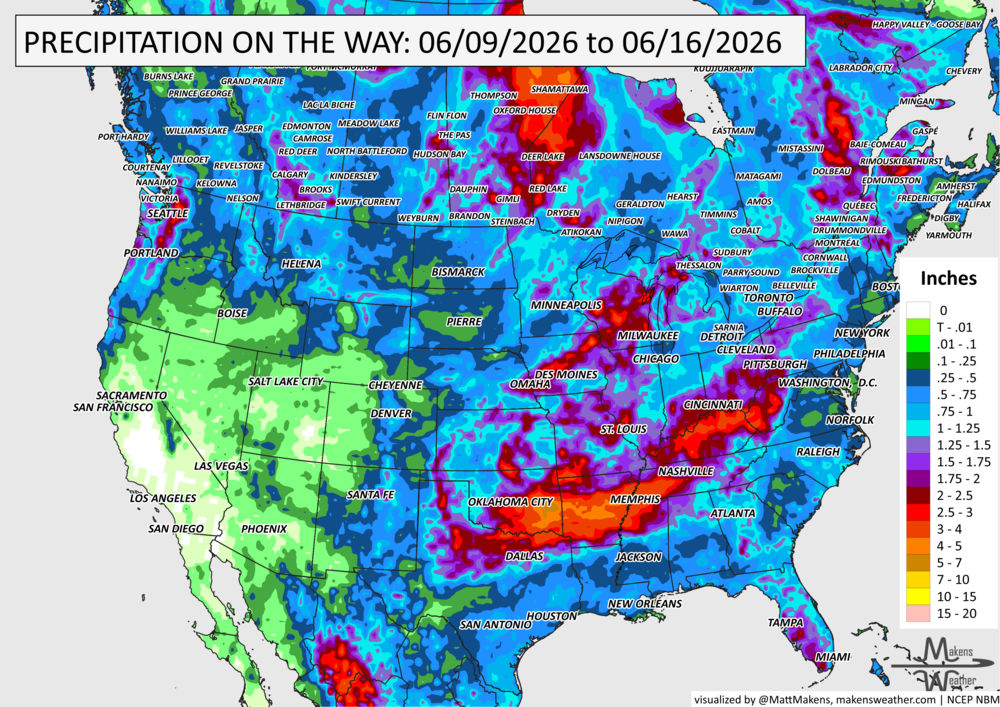
IN THE GAUGES, PRECIPITATION THROUGH THE 16th:
Note: these projected totals are likely to be overdone in many areas because thunderstorms will be the primary source of rainfall, and we know they may be spread apart. So, these types of projections for thunderstorm areas reflect a potential rainfall total if you get the storms to pass over you. The actual observations will be more isolated totals of these magnitudes.
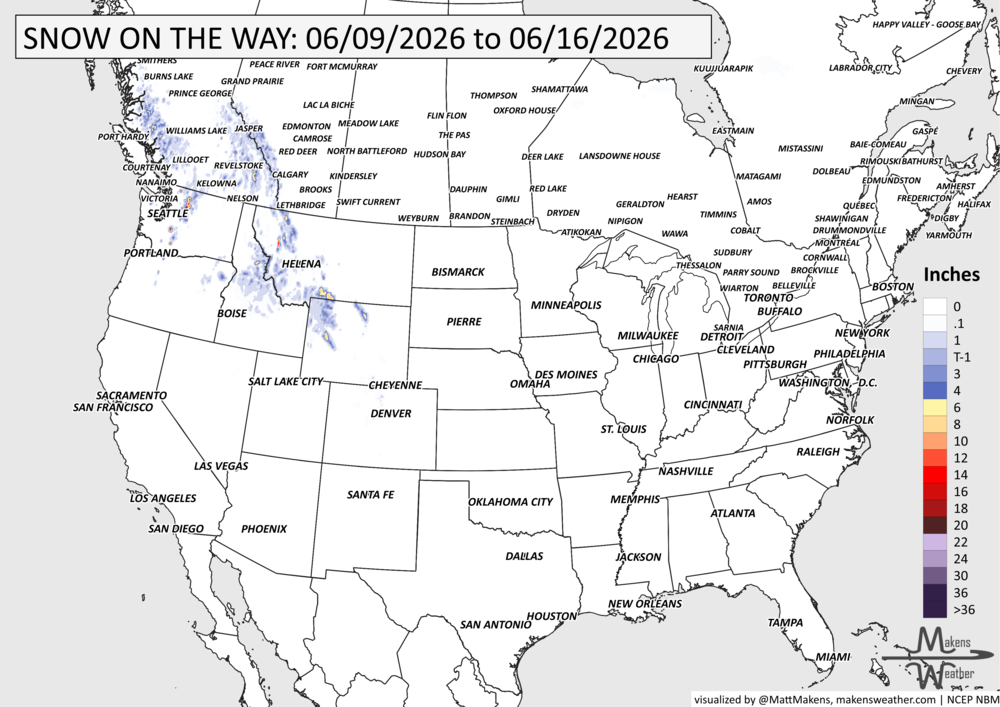
GRAB A RULER, SNOWFALL THROUGH THE 16th:
RECORDS MADE TO BE BROKEN, DAILY HIGHS (RED) | DAILY LOWS (BLUE):
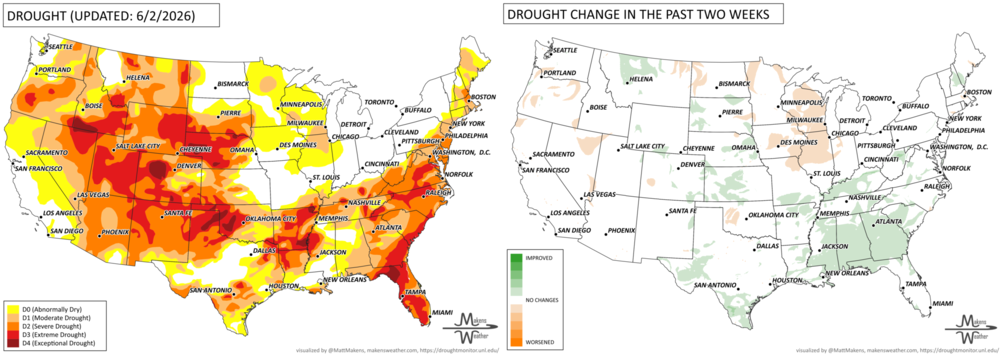
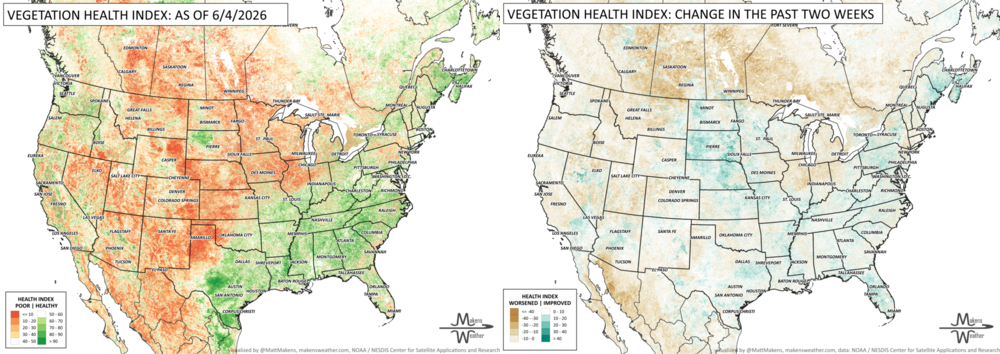
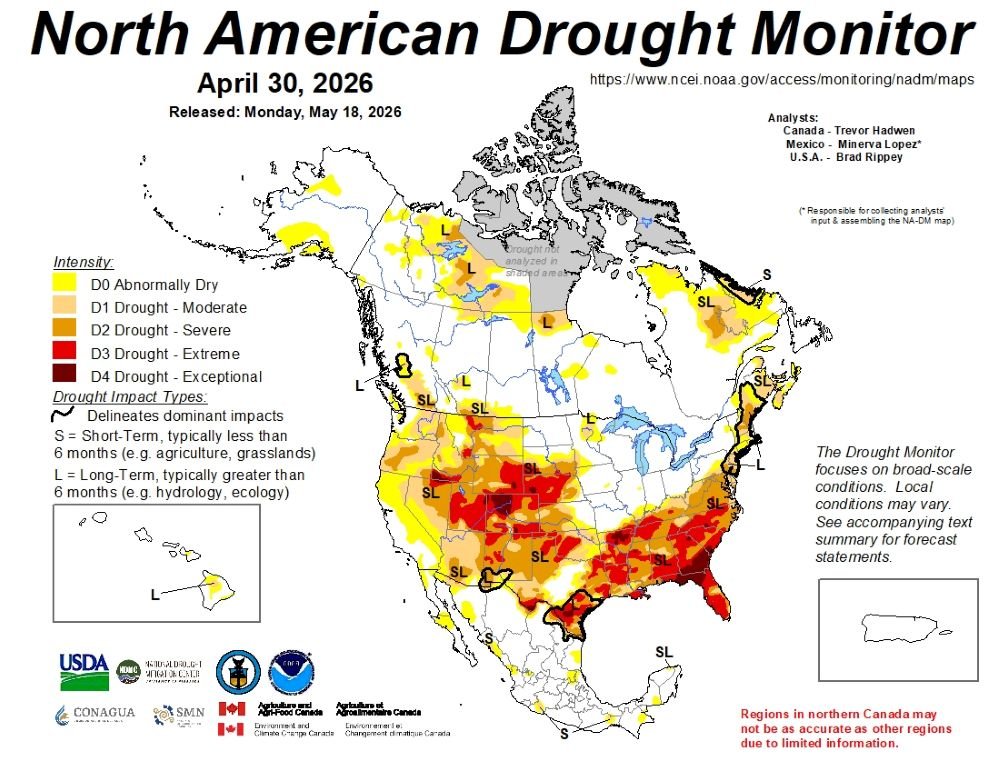
UN-DROUGHTABLY DRY:
A blocked weather pattern dominated the week, featuring strong high pressure over the central U.S. and storm systems over the West and East. This led to cooler-than-normal conditions in the Southwest and parts of the Northeast, while the northern Plains and Upper Midwest experienced unusually hot temperatures before cooler, stormier weather arrived late in the week.
Frequent thunderstorms along a stalled front brought beneficial rainfall to the South, Southeast, and parts of the High Plains, resulting in additional drought improvement. However, hot and dry conditions worsened drought across the northern Plains and western Midwest. Late-week storms delivered much-needed rain to Montana, helping ease drought conditions there, while parts of New England also benefited from additional rainfall. Meanwhile, the Mid-Atlantic turned drier after a wet period the previous week.. - https://droughtmonitor.unl.edu/
TRACKING THE TROPICS
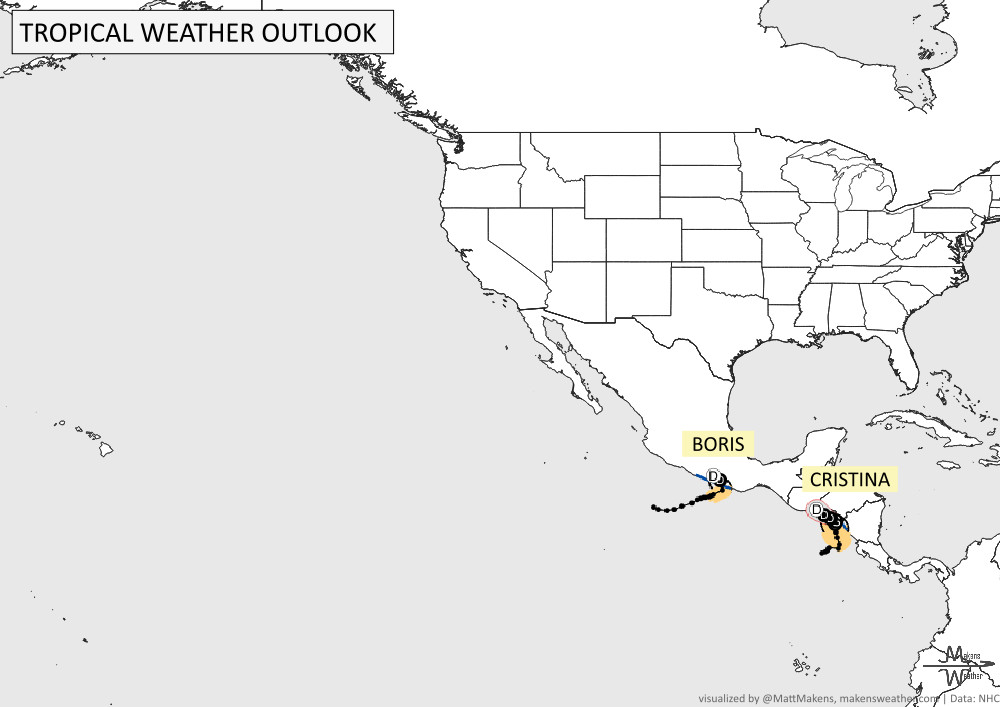
1. Heavy rainfall associated with Tropical Storm Boris across portions of southern Mexico will subside by later today. Some risk of additional flooding and mudslides continues this morning, especially in areas of steep terrain. Tropical storm conditions are likely occurring along the coast within the Tropical Storm warning area and will continue through early this morning.
2. Heavy rainfall associated with Tropical Storm Cristina will impact coastal portions of Central America through Thursday. This rainfall may produce life-threatening flooding and mudslides, especially in areas of steep terrain. Tropical storm conditions, especially in gusts, are expected to impact portions of the coast of Nicaragua, El Salvador, and Honduras today.
-NHC.
ARE YOU CIRRUS?!
Today in weather history:
1972 A steady flow of warm, moist air near the surface fed storms and anchored them against the Black Hills for six to eight hours. A flash flood killed 238 people in the Rapid City area after as much as fifteen inches of rain had fallen over the eastern Black Hills.
An active and impactful weather pattern is setting up across much of North America through next week. Multiple rounds of severe thunderstorms are expected from the eastern Canadian Prairies, U.S. Plains into the Mississippi Valley, bringing the risk of damaging winds, large hail, and tornadoes. Heavy rainfall may lead to localized flooding from the Northern Plains to the Southeast, while wildfire concerns continue across the Four Corners region. At the same time, summer heat is building, with the East experiencing its hottest temperatures of the season late this week before above-average warmth expands westward during the weekend.