
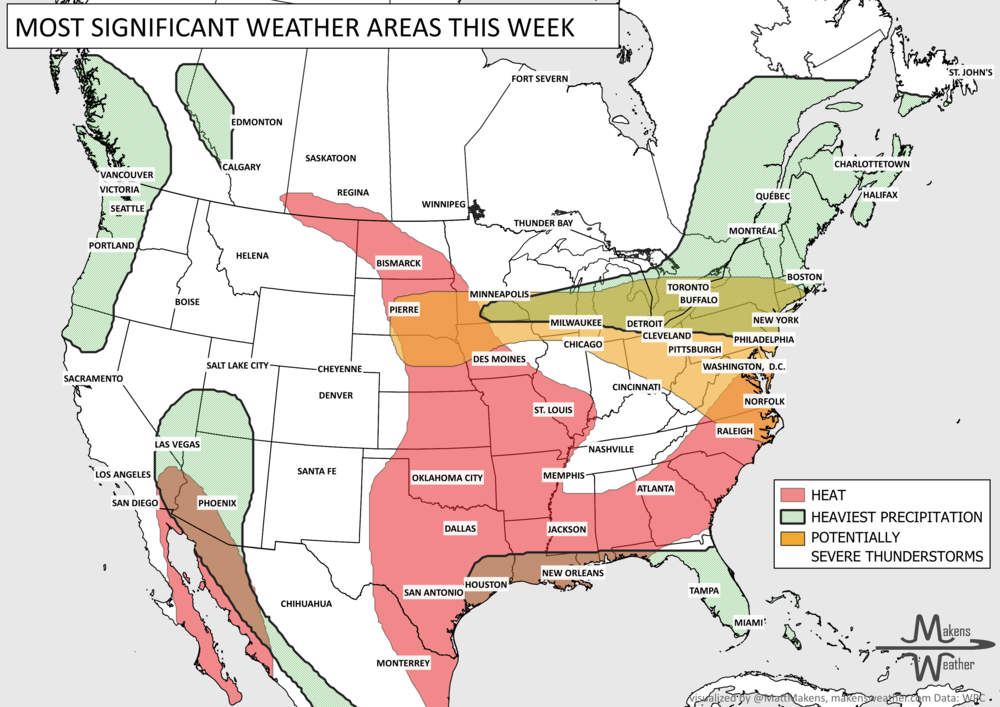
Weekly Weather Watch: Tuesday, April 30th, 2024
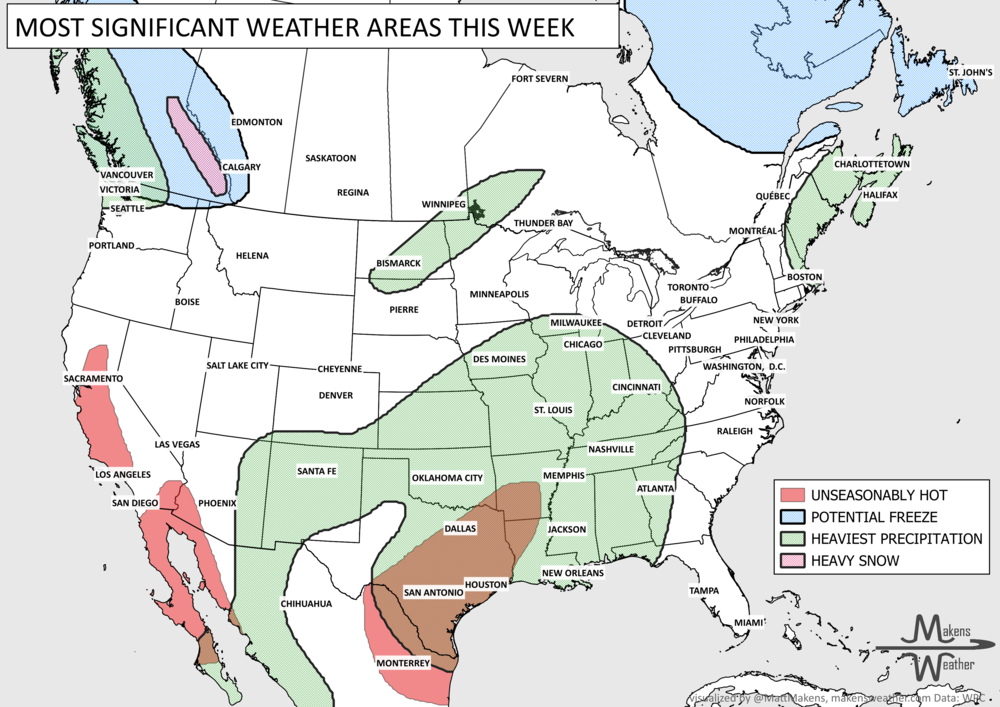
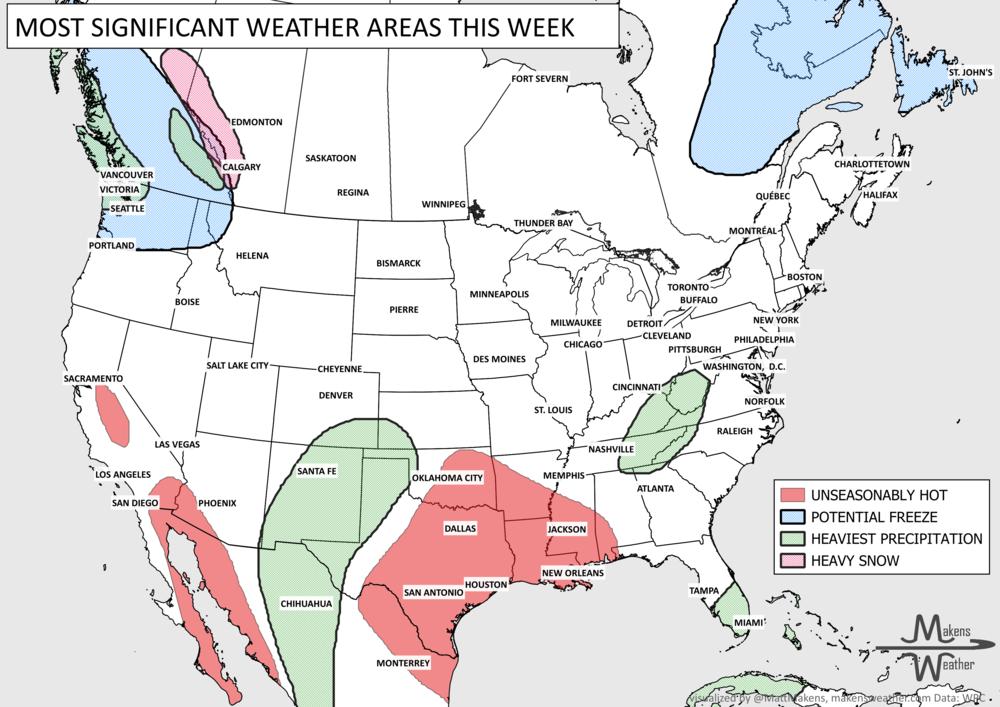
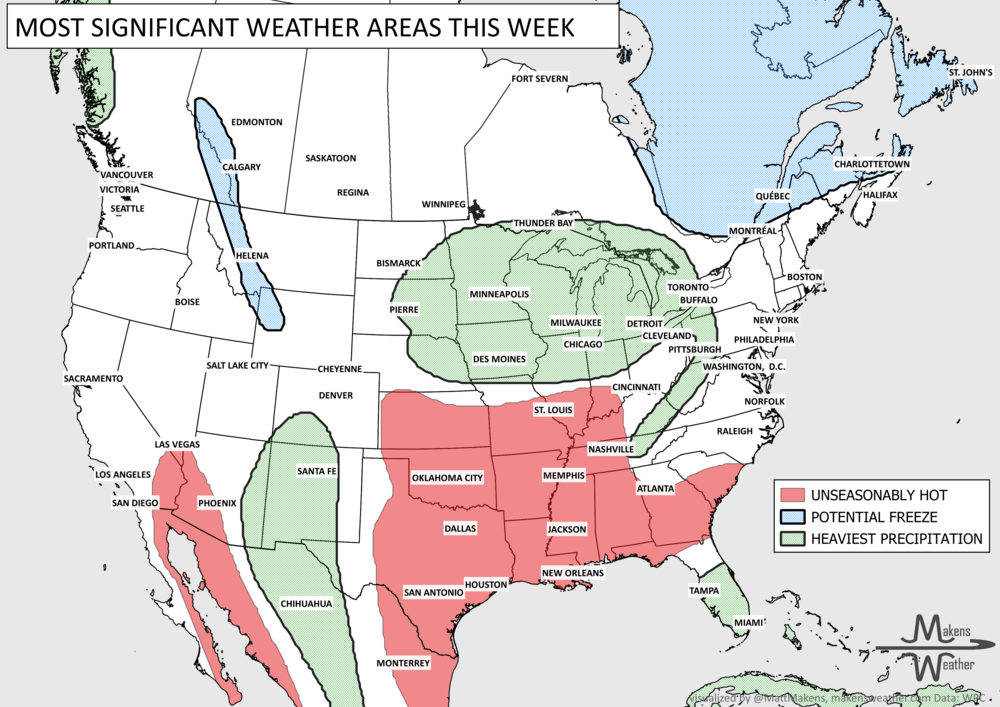
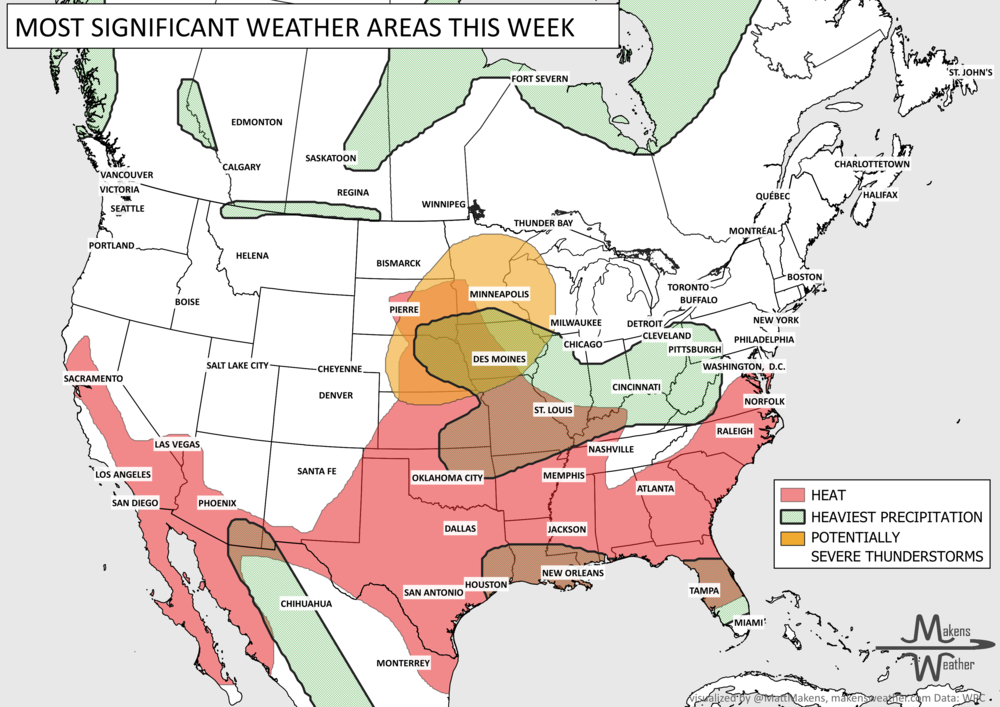
In this week’s guide to the headlines that will be made from weather events, we again will focus on severe weather across the Central U.S., along with very heavy rainfall in the same regions. First, a look at the most significant weather ahead, and then a bulleted list of the headlines for the U.S. and Canada.
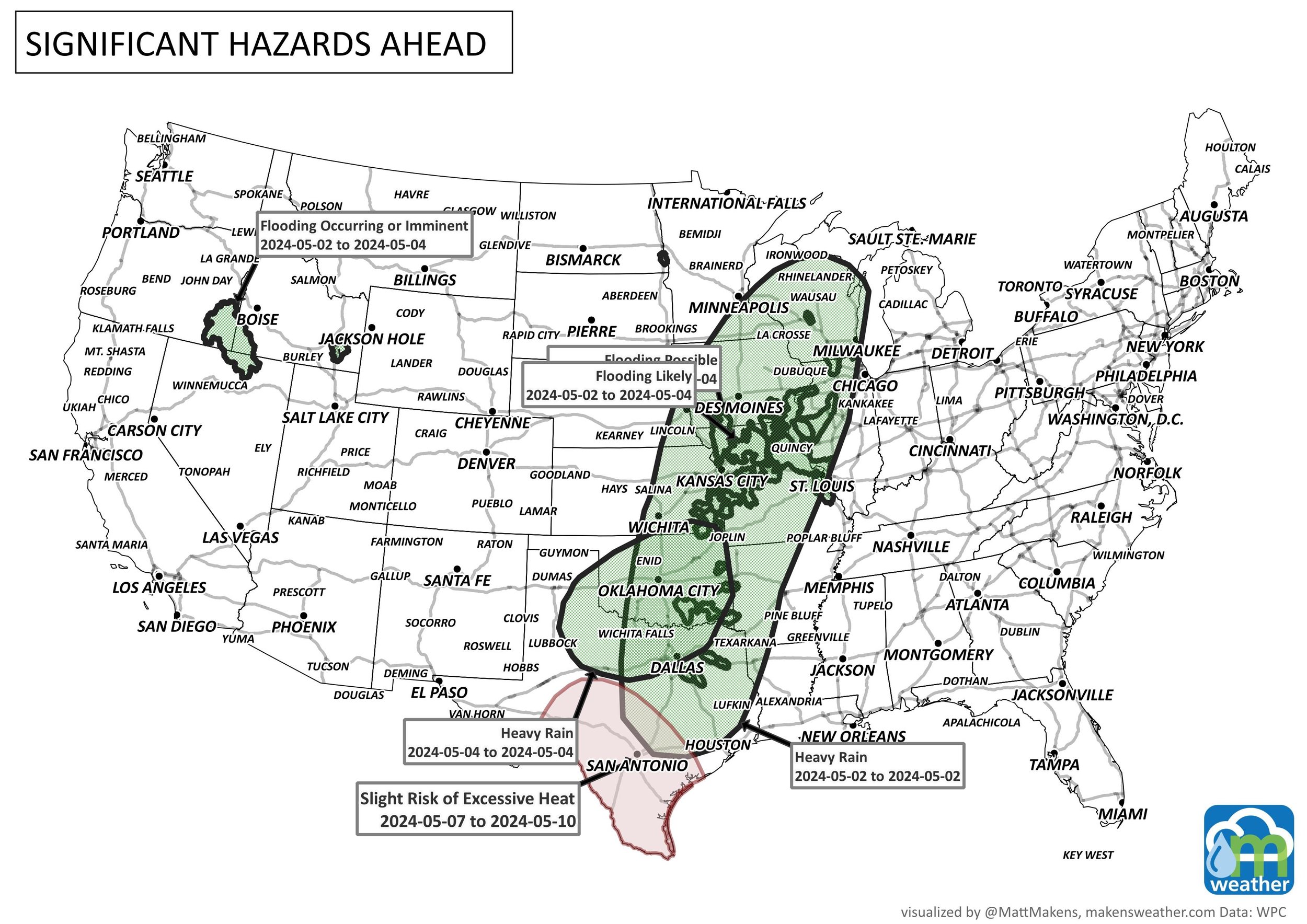
Severe/damaging thunderstorms and flooding concerns for parts of the Upper/Middle Mississippi Valley and Great Plains.
Critical Fire Weather for the Southern High Plains on Wednesday
Cool and snowy in the Northwest
Heavy snowfall in the Canadian Rockies.
For Alaska, heavy precipitation for the southern coastal region.
There is a slight risk of excessive heat for portions of the Southern Plains from May 7 to 10.
There is a slight risk for heavy precipitation for portions of the Northern Plains and Upper Mississippi Valley, May 7-8.
There is a slight risk for high winds for the Great Basin, Central and Southern Rockies, Desert Southwest, and the Central and Southern Plains, May 7-10.
Risk for rapid onset drought for portions of Central Florida.
Here’s the timeline for the next week:

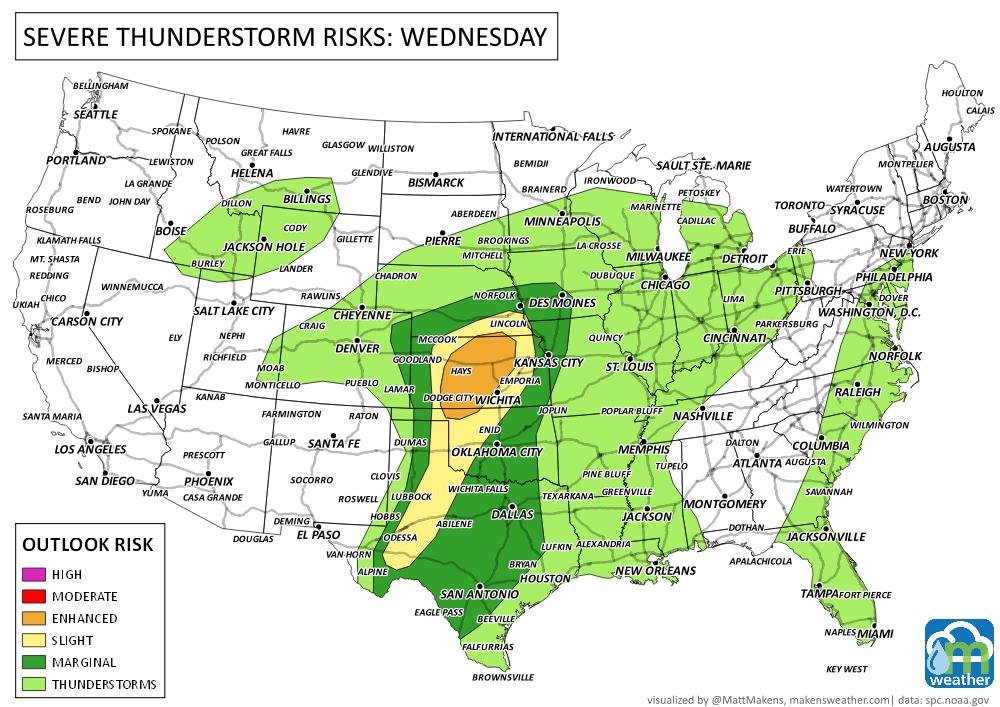
Severe Weather Outlook areas:

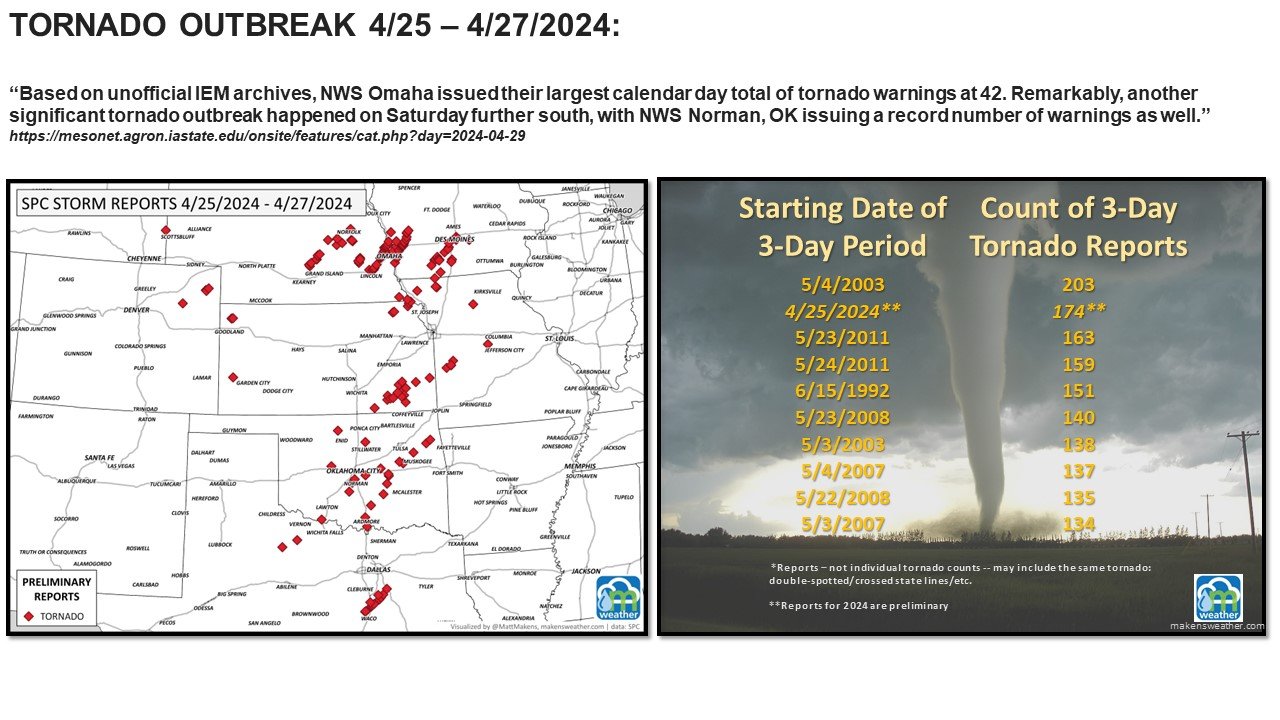
perspective on the recent severe weather outbreak
Based on preliminary numbers, it may be one of the most active three-day stretches for tornadoes since 1950. I did a quick and dirty data analysis of 3-day tornado outbreaks, and 2024 is currently ranked 2nd. This is very preliminary as the data hasn't been verified yet by the NOAA NWS Storm Prediction Center.
Here is a list of tornado reports, not individual tornadoes, as some have been "double-counted" since 1950. These include any strength of a tornado, also.
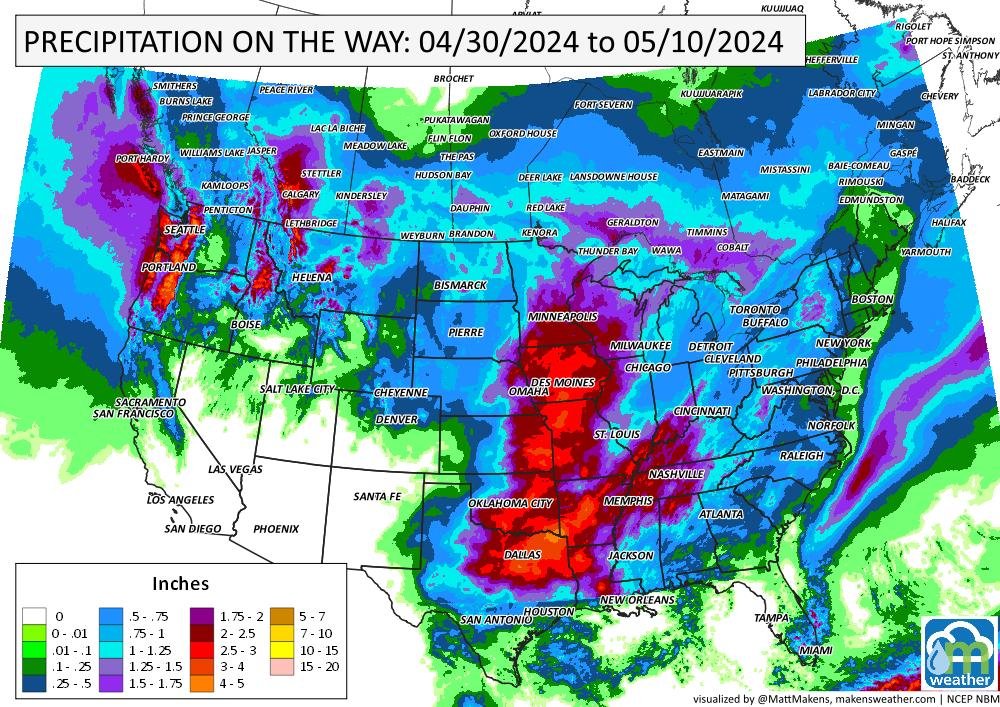
Total Precipitation expected the next 10 days


This briefing is meant to guide you to the weather headlines that will be made during the week ahead. I keep them brief to save your busy schedules, but please don’t hesitate to contact us if you need anything specific: click here to email.
Pacific tropical moisture will drive one of the bigger weather stories this week as it gets pulled north into a slow-moving storm over the Southwest. New Mexico and western Texas face the greatest flash-flood threat early in the week, before heavy rain expands across the Southern Plains, Central Plains and Midwest. Some areas could pick up 3 to 6 inches of rain, with locally higher totals. The wet pattern won’t end quickly either, with the threat gradually shifting east toward the Mississippi and Tennessee Valleys later this week and into the weekend. Meanwhile, the Nor’easter affecting New England is winding down, while late-season heat hangs on across southern Texas and eventually builds across parts of the West.